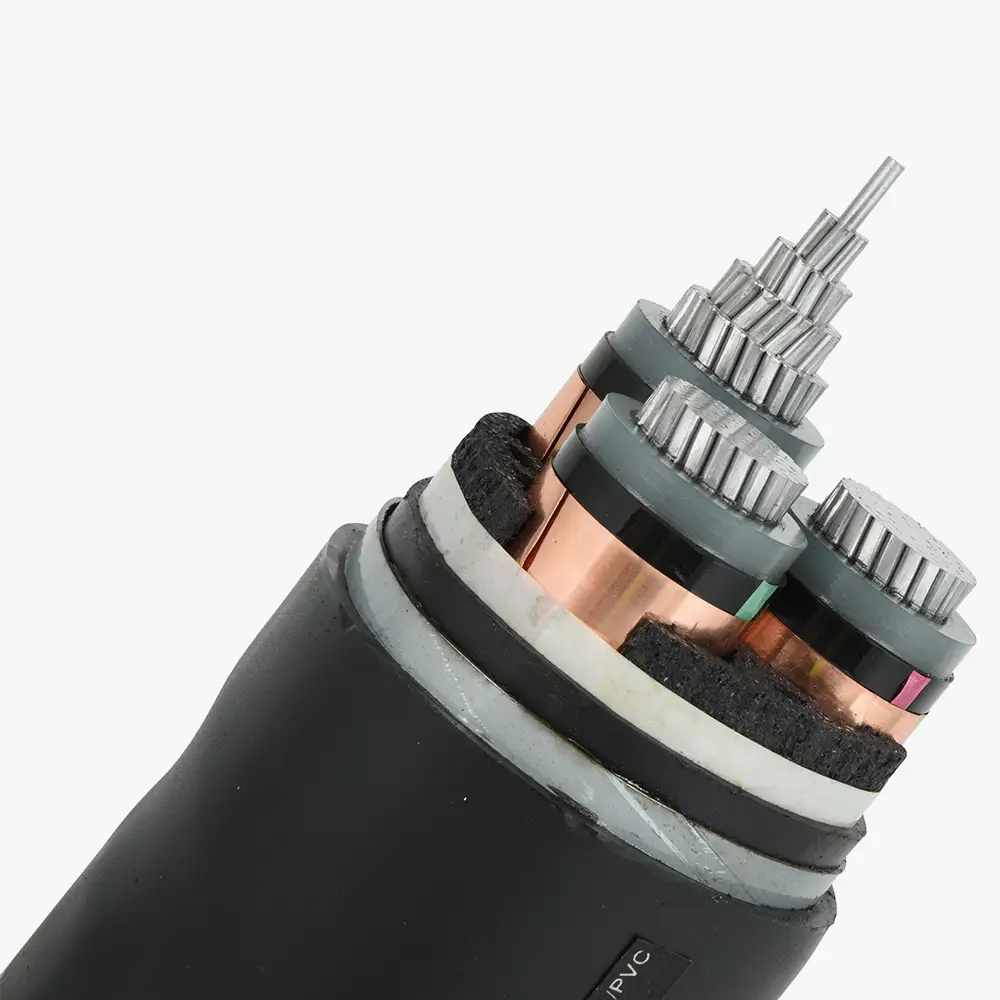
XLPE & PVC Insulated Electric Power Cables for Reliable Power Transmission

Your Trusted Global Supplier of XLPE & PVC Electric Power Cables

At GenSeeki, we supply a complete range of XLPE and PVC insulated power cables, engineered by experts for dependable energy transmission. Moreover, our cables are valued for their cost-efficiency, moisture resistance, and chemical durability, making them ideal for both indoor and outdoor installations. Designed for permanent installations, Genseeki power cables are suitable for overhead lines, direct burial, and industrial infrastructure. Available in single or multi-core configurations, our products meet international standards for low, medium, and high voltage applications.
Electric power cables from Genseeki are widely used in data centers, substations, overhead lines, underground grids, and renewable energy projects. Whether your installation requires flexibility, high thermal endurance, or corrosion resistance, we offer the right cable solution for every voltage level and challenging environment.
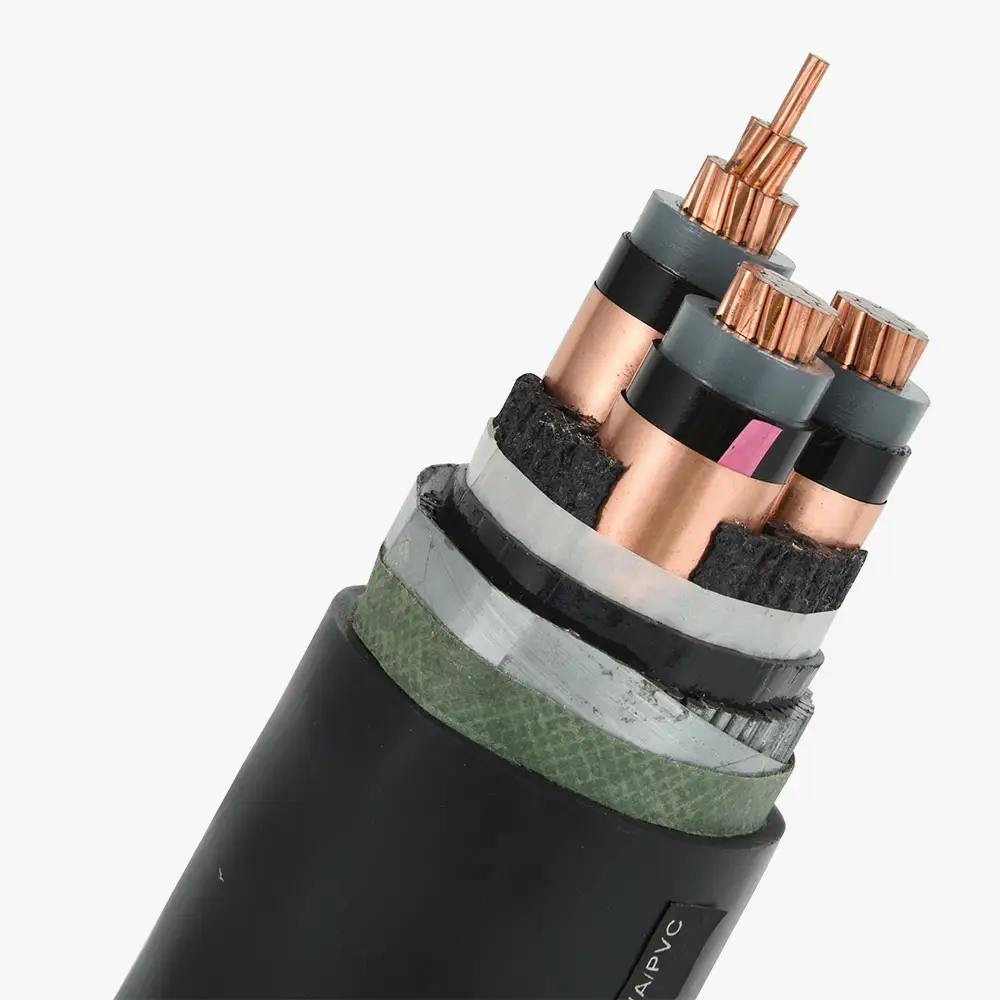
XLPE insulated copper conductor electric power cable from GenSeeki for high-efficiency power transmission

Copper Conductor XLPE Electric Power Cable

Key Advantages:
✔ Low electrical resistivity for minimal power loss.
✔ Delivers up to 30% higher ampacity than aluminum.
✔ Superior creep resistance for high-load installations.

Applications:
The copper electric power cables are commonly used in Data centers / Substations / Underground power transmission

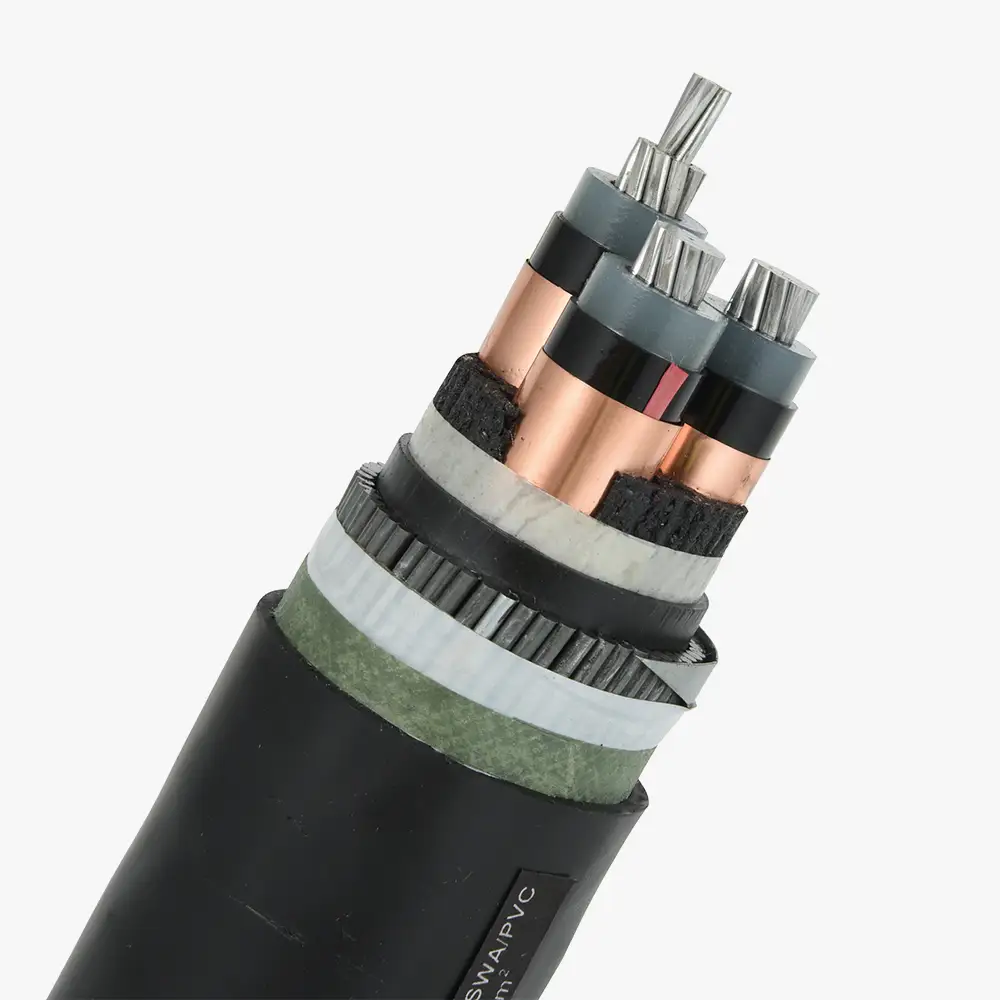
Aluminum Conductor XLPE Electric Power Cable

Key Advantages:
✔ Up to 50% lighter than copper, easy for installation.
✔ 40–60% cost reduction without compromising conductivity.
✔ Manufactured with GB/T compliant aluminum (≥99.7% purity).

Applications:
This type of electric power cable is ideal for overhead lines / Solar farms / Long-distance distribution

 Lightweight aluminum conductor XLPE insulated power cable from Genseeki
Genseeki aluminum alloy conductor XLPE cable with corrosion resistance

Aluminum Alloy Conductor XLPE Electric Power Cable

Key Advantages:
✔ 30% stronger tensile strength compared to pure aluminum.
✔ Excellent salt spray corrosion resistance.
✔ Withstands continuous operation at 90°C.

Applications:
AL Alloy electric power cables from Genseeki are ideal for Coastal areas / Sea-crossing bridges / Wind farms

XLPE vs. PVC Insulated Power Cables: What’s the Difference?

Compare key properties to choose the right insulation for your project.
This quick comparison highlights the differences between XLPE and PVC insulation in terms of temperature resistance, mechanical strength, cost-efficiency, and typical use cases, helping you select the ideal solution for your installation environment.

PVC

70°C for general temperature conditions
Common voltage ratings up to 0.6/1 KV.
Mechanical strength weaker.
Lower cost, budget-friendly.
Electrical insulation performance moderate.

XLPE

90°C suitable for high-temp environments
Common voltage ratings up to 35 KV.
Mechanical strength strong.
Cost higher than PVC
Electrical insulation performance higher.
CU or AL or AL Alloy conductor, XLPE Insulated, PVC Sheathed electric cable. Rated Voltage of 1KV to 35KV
YJVCU conductor, XLPE insulated, PVC sheathed electric cable
YJLVAL conductor, XLPE insulated, PVC sheathed electric cable
YJLHVAL Alloy conductor, XLPE insulated, PVC sheathed electric cable
YJV22CU conductor, XLPE insulated, Steel tape armoured, PVC sheathed electric cable
YJLV22AL conductor, XLPE insulated, Steel tape armoured, PVC sheathed electric cable
YJLHV22AL Alloy conductor, XLPE insulated, Steel tape armoured, PVC sheathed electric cable
YJV32/YJV42CU conductor, XLPE insulated, Steel wire armoured, PVC sheathed electric cable
YJLV32/YJLV42AL conductor, XLPE insulated, Steel wire armoured, PVC sheathed electric cable
YJLHV32/YJLHV42AL Alloy conductor, XLPE insulated, Steel wire armoured, PVC sheathed electric cable

Conductor Comparison for Electric Power Cables: Copper vs. Aluminum vs. AL Alloy

Choosing the right conductor is essential for ensuring the performance of electric power cables in different voltage systems. Understand performance trade-offs for smarter cable selection.
Learn the key differences between copper, aluminum, and aluminum alloy conductors. Compare their conductivity, strength, weight, and cost-effectiveness. This comparison helps you identify the most suitable conductor type for your power distribution, transmission, or industrial application.

Copper Conductor

Heavier (≈8.9 g/cm³)
Electrical Conductivity Excellent
High tensile strength
Good, easy to bend
Very stable connections
Cost high

Aluminum Conductor

Very light (≈2.7 g/cm³)
Electrical Conductivity Moderate
Low tensile strength
Average, prone to break
Risk of loose or hot joints
Cost low

AL Alloy Conductor

Lightweight (≈2.8 g/cm³)
Electrical Conductivity Moderate
Improved strength via alloying
Good ductility and flexibility
Improved with proper alloy design
Cost moderate

Expand Your Cable Solutions with GenSeeki

Explore our full range of industrial cables including mining, rubber-sheathed, welding, waterproof, photovoltaic, PVC flexible, control, and custom cables. Find the perfect cable for your needs and request detailed specifications today!

PVC Insulation Flexible Wire

PVC Insulated & Sheath Control Cable

TUV Certified Solar Cable

Scroll to Top